

Jaisalmer — the Golden City of Rajasthan — is one of India’s most extraordinary travel destinations. Rising dramatically from the Thar Desert, its honey-coloured sandstone fort, intricately carved havelis, and vast rolling dunes create a landscape unlike anywhere else in the country. But because Jaisalmer sits at the edge of one of the world’s great deserts, its climate is extreme, and the time of year you choose to visit will define your entire experience.
This guide is written by Hinglaj Tours and Travels — a Jaisalmer-based tour operator with years of direct experience running desert safaris, heritage tours, and overnight camp experiences across every season. We give you an accurate, honest picture of each season, including the months that most travel blogs overlook.
| Quick Answer The best time to visit Jaisalmer is November to February, when daytime temperatures are comfortable (15–25 °C), nights are cool and clear, and all outdoor activities — desert safaris, camel rides, and fort tours — are fully operational. October and March are excellent shoulder-season alternatives for fewer crowds and lower accommodation rates. |
1. Jaisalmer Climate at a Glance
Jaisalmer experiences a classic hot desert climate. Summers are intensely hot, winters are mild and dry, and the monsoon is brief and light. The city receives barely 100–200 mm of rainfall per year — one of the driest major cities in India. Temperature swings between day and night can be dramatic, particularly in winter when afternoons may reach 25 °C while nights fall to 5 °C or below.
| Peak Season Nov – Feb | Best Months Dec & Jan | Hottest Month May (41 °C+) |
| Coolest Month Jan (~12 °C low) | Desert Festival February | Annual Rainfall 100–200 mm only |
2. Winter (October – March): The Peak Season
Winter is unquestionably the best time to visit Jaisalmer for most travellers. From October through March, the city transforms into the ideal desert destination — warm, sunny days give way to crisp, starlit nights, and every major attraction is fully accessible and at its most photogenic.
Daytime temperatures range between 15 °C and 26 °C, perfect for exploring Jaisalmer Fort, visiting Patwon Ki Haveli, and spending extended hours on the Sam Sand Dunes or Khuri Dunes. Evening temperatures drop noticeably — sometimes to 5–8 °C in January and February — making bonfires at desert camps not just atmospheric but genuinely necessary.
October & November — The Shoulder Entry
October marks the end of monsoon and the beginning of the travel season. The desert air is clean, the dunes are freshly shaped by monsoon winds, and hotel prices have not yet peaked. November is even better — temperatures are comfortably warm without the January chill, and advance bookings are easier to secure. These two months are ideal for travellers who prefer smaller crowds and slightly lower accommodation rates while still enjoying full access to all activities.
December & January — The Heart of Peak Season
December and January attract the largest volume of domestic and international tourists. Jaisalmer Fort glows golden in the crisp winter sun, desert safaris run throughout the day, and the atmosphere across the city is at its most vibrant. Book accommodation and transport at least four to six weeks in advance — particularly around Christmas and New Year, when desert camps and heritage hotels fill up entirely.
| ▌ Local Expert Tip — Hinglaj Tours and Travels January nights in Jaisalmer can be genuinely cold, with temperatures sometimes dropping to 5 °C or below. If you are planning a night at a desert camp at Sam Sand Dunes or Khuri, carry a warm jacket and request extra blankets when booking. The cold is absolutely worth it — winter skies over the Thar Desert offer some of the clearest stargazing conditions anywhere in India. |
February & March — Festival Season and the Warm Transition
February is widely considered the most culturally rich month to visit Jaisalmer, as it hosts the famous Jaisalmer Desert Festival — a three-day celebration of Rajasthani folk music, camel races, turban-tying competitions, and traditional dance, held on the full moon of the month of Magh. By March, temperatures begin rising towards 30 °C, but mornings and evenings remain very pleasant. March is an excellent choice for travellers seeking Jaisalmer’s full atmosphere without the December–January peak-season crowds.
3. Summer (April – June): The Off Season
Summer in Jaisalmer is severe. From April onward, temperatures climb rapidly, and by May and June the mercury regularly exceeds 45 °C in the afternoon. The proximity to the Thar Desert means there is virtually no humidity to moderate the heat — it is a dry, relentless warmth that makes extended outdoor activity genuinely dangerous without serious preparation.
Desert safaris are generally suspended or heavily curtailed during the hottest months, as sand surface temperatures can exceed 70 °C. Sandstorms — locally known as aandhi — are common in May and June, reducing visibility and making outdoor activity inadvisable for hours at a time.
Who Should Consider Visiting in Summer?
Despite the conditions, summer offers distinct advantages for a specific type of traveller. Hotel rates drop significantly — sometimes by 40 to 60 per cent compared to peak season — and major monuments such as Jaisalmer Fort, Patwon Ki Haveli, and Salim Singh Ki Haveli can be explored in near-total solitude. April can still be rewarding for heritage enthusiasts who restrict outdoor activity to early morning (before 9 AM) and evening (after 6 PM). May and June, however, are best avoided by most visitors.
| ▌ Important Safety Note If you must travel in May or June, stay strictly indoors between 11 AM and 5 PM. Carry at least 3–4 litres of water per person per day, wear loose full-sleeved cotton clothing, and never underestimate how quickly heat exhaustion develops in a desert environment. Aandhi (sandstorms) can appear with little warning — seek shelter immediately if one begins. |
4. Monsoon (July – September): The Hidden Season
Jaisalmer receives very little rain even during the monsoon — typically 100 to 200 mm across the entire season, compared to thousands of millimetres in coastal India. This makes the Jaisalmer monsoon a genuinely unique experience: not a downpour, but a series of brief, dramatic rain events that temporarily transform the desert landscape.
After rainfall, the sand dunes take on a richer, deeper colour. Sparse desert vegetation turns green almost overnight, and migratory birds begin appearing around Gadisar Lake. Temperatures range from 22 °C to 36 °C — still warm, but considerably more tolerable than peak summer. Humidity rises slightly but remains low by Indian standards.
The main practical considerations during monsoon are unpredictable road conditions on some rural routes and the occasional suspension of overnight desert camp programmes. However, Jaisalmer Fort, the havelis, and the city markets remain fully accessible throughout. This is an excellent period for budget travellers and photographers who want dramatic desert skies without tourist crowds.
5. Month-by-Month Temperature & Travel Breakdown
The table below provides a complete overview of average temperatures, season classification, and overall visit rating for each month of the year at Jaisalmer.
| Month | Avg High | Avg Low | Season | Visit Rating |
| January | 22 °C | 12 °C | Winter (Peak) | ★★★★★ |
| February | 25 °C | 15 °C | Winter — Desert Festival | ★★★★★ |
| March | 32 °C | 21 °C | Winter (Shoulder) | ★★★★☆ |
| April | 37 °C | 26 °C | Summer | ★★☆☆☆ |
| May | 41 °C | 29 °C | Summer (Extreme) | ★☆☆☆☆ |
| June | 40 °C | 30 °C | Summer (Extreme) | ★☆☆☆☆ |
| July | 36 °C | 27 °C | Monsoon | ★★☆☆☆ |
| August | 34 °C | 26 °C | Monsoon | ★★★☆☆ |
| September | 35 °C | 25 °C | Monsoon | ★★★☆☆ |
| October | 34 °C | 21 °C | Shoulder (Rising) | ★★★★☆ |
| November | 29 °C | 15 °C | Winter (Peak) | ★★★★★ |
| December | 23 °C | 13 °C | Winter (Peak) | ★★★★★ |
6. Festivals & Events Calendar
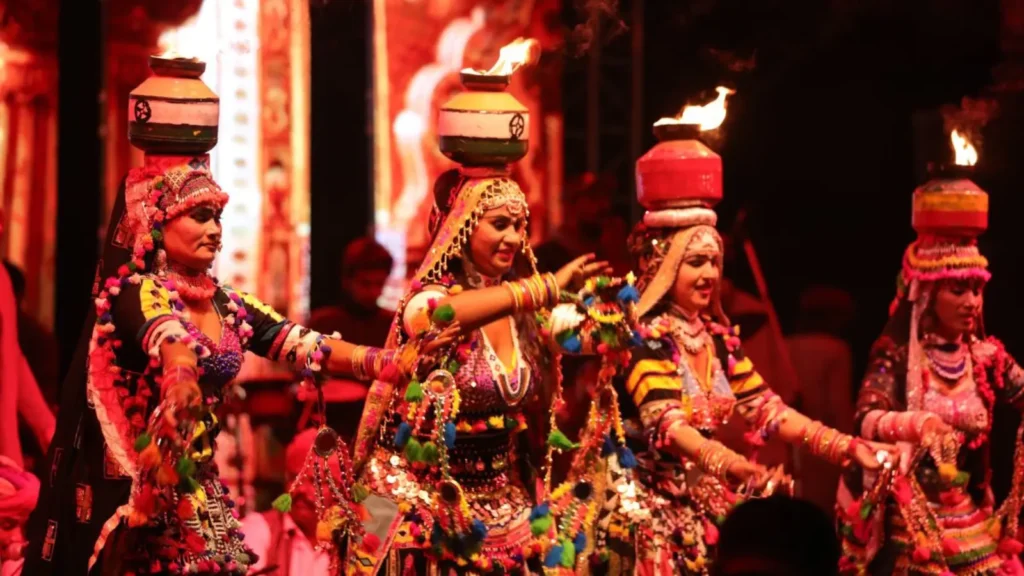
Jaisalmer’s cultural calendar is one of the richest in Rajasthan. Timing your visit to coincide with a local festival can transform a good trip into an unforgettable one.
Jaisalmer Desert Festival (February)
The most celebrated event in the city, held over three days at Sam Sand Dunes on the full moon of the Hindu month of Magh — typically in late January or early February. It features camel races, turban-tying competitions, Mr. Desert pageants, folk music and dance performances, and fire shows. Book accommodation two to three months in advance for the festival period.
Holi (March)
Holi in Jaisalmer is celebrated with great energy, with coloured powders swirling against the golden city backdrop. Several desert camps and resorts near Sam Sand Dunes organise Holi-themed evenings with bonfires, folk music, and traditional Rajasthani food.
Gangaur Festival (March – April)
One of Rajasthan’s most visually striking festivals, dedicated to Goddess Gauri. Women across Jaisalmer dress in vibrant traditional attire and carry clay idols in procession through the city’s narrow carved lanes — an exceptional occasion for cultural photography.
Diwali (October – November)
The entire Jaisalmer Fort is illuminated with thousands of oil lamps and decorative lights during Diwali. The markets overflow with festivity and sweets. An evening walk through the fort and along the city ramparts during Diwali is one of the most memorable experiences the city offers.
Dussehra (October)
Dussehra in Jaisalmer is marked by folk music performances, colourful processions through the old city, and the symbolic burning of Ravana effigies. The atmosphere in the walled city during Navratri and Dussehra is particularly lively.
7. Best Season for Each Activity
Not every activity is available in every season. Use this table as a quick-reference guide when planning your itinerary around your specific interests.
| Activity | Best Time | Avoid / Note |
| Desert Safari (Camel / Jeep) | October – March | Avoid May–June (extreme heat) |
| Overnight Desert Camp | November – February | Not recommended Apr–Sept |
| Jaisalmer Fort & Havelis | Year-round | Avoid midday in May–June |
| Stargazing on the Dunes | November – February | Monsoon = cloudy skies |
| Photography — Dunes & Fort | October – March | Summer haze reduces clarity |
| Desert Festival Experience | February only | — |
| Budget Travel (Low Rates) | April – June | Outdoor activities limited |
| Birdwatching — Gadisar Lake | August – October | — |
| Sam Sand Dunes (Desert Festival) | October – March | Gets crowded in peak season |
| Khuri Dunes (Quieter Safari) | October – March | Ideal for intimate experience |
Sam Sand Dunes vs Khuri: Sam Sand Dunes (42 km from city) is larger, more developed, and the official venue for the Desert Festival — ideal for those who want maximum activity options. Khuri (48 km from city) is quieter, more intimate, and recommended for travellers seeking a peaceful, authentic desert experience. Both are best visited from October to March.
8. What to Pack for Each Season
Winter (October – March)
- Light cotton or linen clothing for daytime
- A warm fleece or jacket for evenings and nights — essential in December and January
- Comfortable closed-toe walking shoes for cobbled streets inside the fort
- Sunscreen SPF 50+ — winter sun in the desert is deceptively strong
- A dupatta or light scarf — useful at religious sites and inside the fort
- Reusable water bottle — stay hydrated even in winter
- Dust-protective pouch for electronics during a desert safari
Summer (April – June)
- Loose, full-sleeved cotton clothing in light colours only
- Wide-brimmed hat and UV-blocking sunglasses
- High-SPF sunscreen — reapply every two hours
- Oral rehydration salts — dehydration is a real risk
- Minimum 3–4 litres of water per person per day
- A light dust mask or thick handkerchief for sandstorm conditions
Monsoon (July – September)
- Light, quick-dry clothing
- Compact umbrella or packable rain jacket
- Waterproof footwear or sandals with grip
- Insect repellent — mosquitoes are more active post-rainfall
- Camera dry bag for photography equipment
9. Frequently Asked Questions
Which is the absolute best month to visit Jaisalmer?
November, December, and January are the prime months. The weather is at its most comfortable, all activities are fully operational, and the city is at its most vibrant. February is the top choice if you wish to attend the Jaisalmer Desert Festival.
Is it safe to visit Jaisalmer in summer?
April is manageable with careful planning, but May and June should be avoided by most travellers — especially families with young children, elderly visitors, or anyone with heat sensitivity. Temperatures regularly exceed 45 °C and sandstorms (aandhi) are common. If you visit, confine all outdoor activity to before 9 AM and after sunset.
How many days are enough to explore Jaisalmer?
A minimum of two nights and three days is recommended to cover the major attractions: Jaisalmer Fort, Patwon Ki Haveli, Gadisar Lake, and a desert safari with an overnight camp at Sam Sand Dunes or Khuri. Three nights and four days allows a more relaxed pace with time for Bada Bagh, the abandoned village of Kuldhara, and the Longewala border.
Is Jaisalmer worth visiting during the monsoon?
Yes, for the right traveller. August and September offer a surprisingly beautiful desert landscape, very few tourists, and significantly lower hotel rates. Desert camp activities may be limited, but the city’s forts, havelis, and markets remain fully accessible. Excellent for photographers and budget-conscious travellers.
What is the difference between Sam Sand Dunes and Khuri?
Sam Sand Dunes is larger, more commercially developed, and the main venue for the Desert Festival — it offers a wider variety of camp options but can feel crowded during peak season. Khuri is quieter, more intimate, and recommended for those seeking a more authentic and peaceful desert experience. Both are best from October to March.
Should I book accommodation in advance for peak season?
Yes — particularly for December, January, and the Desert Festival period in February. Quality desert camps and heritage hotels in Jaisalmer fill up four to eight weeks in advance during peak season. Last-minute bookings are possible but typically more expensive with limited options available.
Can I do a desert safari from Jaisalmer in one day?
Yes. A half-day evening safari to Sam Sand Dunes or Khuri, including a sunset camel or jeep ride and a cultural performance, is a popular one-day option. For the full experience — sunrise over the dunes, a night under the stars, and a bonfire dinner — an overnight desert camp stay is strongly recommended. Hinglaj Tours and Travels offers both options with fully customised itineraries.
| Plan Your Jaisalmer Trip with Local Experts Hinglaj Tours and Travels is a Jaisalmer-based travel agency with 10+ years of experience running desert safaris, heritage tours, and overnight camp experiences in every season. We know every dune and every hidden corner of the Golden City. Visit: www.hinglajtoursandtravels.com | Book Your Jaisalmer Tour Today |